What Is a Good Credit Score? (And How 20 Points Can Save You $50,000)
Did you know that two people with the exact same income can buy the exact same house, yet one will end up paying $50,000 more for it over time?
It sounds completely unfair, but it happens every single day. The difference isn’t their salary, their savings, or their negotiating skills. It comes down to three digits calculated by a black-box algorithm: their credit score.
Whether you want to buy your first home, refinance an auto loan, or qualify for a high-reward cash-back credit card, your credit score determines the interest rates you pay. Understanding credit score ranges is the fastest way to stop overpaying for debt and start forcing banks to compete for your business.
The key idea: There is no single credit score that guarantees the best rate. What matters is how your score fits into a lender’s pricing tiers, combined with your income, debt, loan type, down payment, credit history, and the lender’s own requirements.
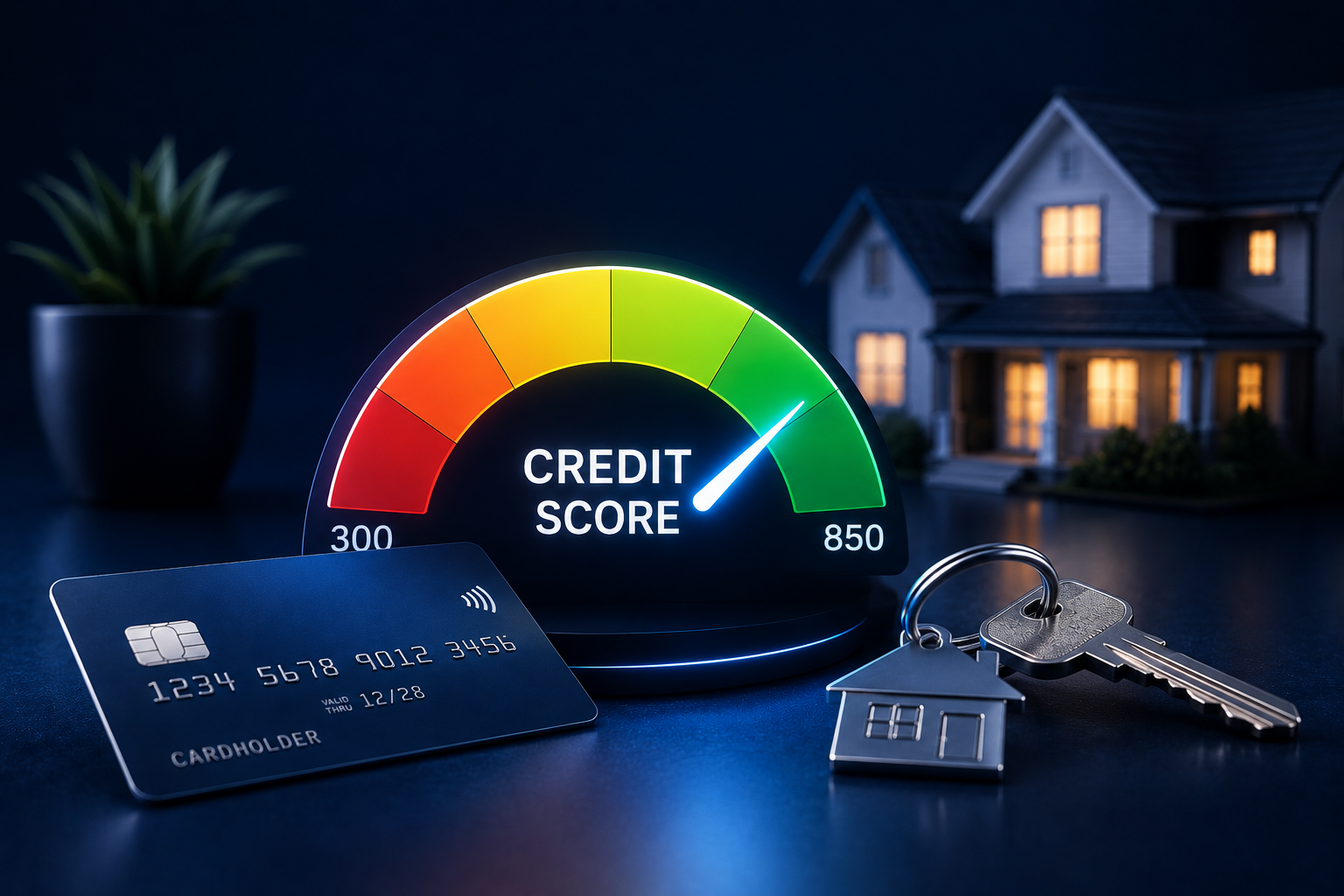
The FICO Score Spectrum: 300 to 850
There are several credit-scoring models, but FICO scores are among the most widely used by lenders. FICO scores generally range from 300 to 850, with higher scores indicating lower credit risk.
Here is the commonly used FICO range breakdown:
Borrowing can be more difficult at this level. Depending on the product and lender, approved applicants may face higher rates, lower limits, larger deposits, or fewer available options.
A fair score can open the door to more credit products, but borrowers may still receive less competitive terms than applicants with stronger profiles.
This range is generally considered good. You may have access to a broader selection of credit products, although approval and pricing still depend on the lender and your complete financial profile.
Borrowers in this range are generally considered lower risk and may qualify for more competitive borrowing terms.
This is the highest FICO range. Once your score is already very high, gaining additional points may not produce a noticeable improvement in the terms available to you.
So What Is Actually a “Good” Credit Score?
For many people, a FICO score of 670 or above is described as good. But treating 670 as a magic cutoff misses an important part of how lending actually works.
Lenders do not look at your score in isolation. They can also consider your income, existing debts, employment and financial history, the amount you are borrowing, the type of loan, your down payment, and their own underwriting criteria.
That means someone with a 705 score could receive different terms from two different lenders, while someone with an 800 score could still be denied for a particular loan because of other parts of their financial profile.
Your score is therefore better understood as one important part of your borrowing profile, not a universal pass or fail number.
Clear Finance HQ Tip: If you are preparing to borrow a large amount of money, do not ask only, “What credit score do I need?” A better question is, “What rate and loan terms could I qualify for with my current profile?” That shifts your attention from chasing a number to measuring the actual financial outcome.
Why Your Score Can Affect the Price of Borrowing
Credit scores are designed to help lenders estimate the likelihood that a borrower will repay as agreed. A stronger score can signal a lower level of credit risk, which may help an applicant qualify for more competitive pricing.
This becomes especially important when the amount borrowed is large or the repayment period is long.
Consider a mortgage. A difference of even a fraction of a percentage point in the interest rate can change the monthly payment. Over many years, those differences can add up to thousands or even tens of thousands of dollars.
The same basic principle can apply to auto loans and other installment debt, although the size of the effect depends on the loan amount, term, rate difference, and other factors.
How Can 20 Points Possibly Be Worth $50,000?
This is where the headline needs an important explanation.
There is no universal formula in which gaining 20 credit-score points automatically saves you $50,000. A 20-point increase could make almost no difference in one situation and a meaningful difference in another.
The reason is that lenders often use pricing tiers or other criteria when determining loan terms. If a small score improvement moves you into a different pricing tier, the financial impact could be larger than the number of points itself suggests.
For example, imagine a borrower taking out a large mortgage. If improving their overall credit profile helps them qualify for a meaningfully lower interest rate, the savings can accumulate over the life of the loan. But the actual savings depend on the rate difference, loan amount, repayment term, and lender.
Think about the math, not the headline.
A credit score does not have a dollar value by itself. The potential value comes from the borrowing terms you receive because of your overall credit profile. The larger the debt and the longer the repayment period, the more important even modest rate differences can become.
Your Credit Score Is Not Your Interest Rate
This distinction is easy to miss.
Your credit score can influence the terms you are offered, but the score itself does not determine your final interest rate. Lenders can use different scoring models, have different approval standards, and price loans differently.
The same person could therefore receive different offers from different lenders.
That is one reason comparison shopping matters. If you are applying for a major loan, getting multiple quotes can help you see how your actual profile is being priced instead of assuming that one lender’s offer represents the entire market.
Three Practical Ways to Improve Your Credit Score
If you want to improve your score, focus on the factors you can actually control. There are no legitimate shortcuts that guarantee a dramatic increase overnight.
1. Keep Revolving Balances Under Control
Credit utilization refers to how much of your available revolving credit you are using.
For example, if your credit card limit is $5,000 and your reported balance is $1,000, your utilization on that card is 20%.
Lower utilization is generally associated with stronger credit profiles, and reducing a reported balance can sometimes produce a score improvement. The important detail is that the balance appearing on your credit report may not be the same as the balance you see in your account today.
You also do not need to carry a credit card balance to build credit. Paying a card in full by its due date can help you avoid interest while still allowing responsible use of the account to be reflected in your credit history.
2. Make Payments on Time
Payment history is an important part of many credit-scoring models.
A missed payment can damage your credit profile, particularly when an account becomes seriously delinquent. The longer an account remains unpaid, the more serious the consequences can become.
If remembering due dates is difficult, automatic payments or calendar reminders can remove some of the risk. Even if you cannot pay a credit card in full, making at least the required payment on time can help you avoid a missed-payment problem.
3. Check Your Credit Reports for Errors
Do not assume every piece of information on your credit report is accurate.
Look for accounts you do not recognize, incorrect balances, inaccurate payment information, duplicate accounts, or other information that does not belong to you.
If you find an error, use the appropriate dispute process with the relevant credit bureau and, when appropriate, the company that supplied the information.
This is particularly useful before applying for a major loan. Discovering a reporting problem after you have already submitted an application can be much more frustrating than checking your reports beforehand.
What About Becoming an Authorized User?
Becoming an authorized user on someone else’s credit card can help in certain circumstances, but it is not a guaranteed credit-score shortcut.
If the account has a strong history of responsible payments and low utilization, information associated with that account may be incorporated into your credit profile depending on the card issuer and scoring model.
However, the opposite can also create problems if negative information from the account is reported and affects your profile.
If you are considering this strategy, find out how the issuer reports authorized-user accounts before assuming that the account will improve your score.
What You Should Do Before Applying for a Major Loan
If you are planning to buy a home, finance a vehicle, or apply for another significant loan, your credit score is only one part of the preparation.
A useful pre-application checklist:
- Check your credit reports for inaccurate information.
- Review your current credit card balances and utilization.
- Make sure your recent payments are being made on time.
- Review your existing debts and monthly obligations.
- Avoid taking on unnecessary new debt immediately before applying.
- Compare offers rather than assuming one lender’s rate is the only option.
- Look at the total cost of borrowing, not just the advertised interest rate.
That last point matters. A loan with a slightly lower interest rate is not automatically cheaper if it comes with substantially higher fees or other costs. When comparing borrowing options, look at the full cost rather than focusing on one number.
Don’t Obsess Over the Number
A credit score is useful, but it is not the entire picture of your financial health.
Someone with an 800 score and thousands of dollars in expensive debt is not automatically in a stronger financial position than someone with a lower score and manageable debt.
Think of your credit score as a tool, not a financial report card.
The goal is not to reach 850 simply for the sake of reaching 850. The goal is to build a credit profile that helps you qualify for reasonable borrowing terms when you actually need them.
Clear Finance HQ Tip: If your score is already high, spending months trying to squeeze out another few points may be less valuable than paying down expensive debt, building savings, or comparing lenders before a major purchase. The useful question is not “How close am I to 850?” It is “What financial outcome will this score help me achieve?”
Frequently Asked Questions
Is a 700 credit score good?
A 700 FICO score generally falls within the good range. However, whether it qualifies you for a particular loan or interest rate depends on the lender, loan type, current market conditions, and the rest of your financial profile.
Is an 800 credit score much better than a 750?
Both scores are in the very strong range. Once a score is already high, an additional 50 points may not materially change the terms available to you. The difference depends on the lender and product rather than the score alone.
How many points does paying off a credit card increase your score?
There is no fixed number. The effect depends on your credit profile, the balance being reported, your utilization, and the scoring model being used. Paying down a large revolving balance can sometimes produce a noticeable change, but nobody can accurately promise a specific point increase in advance.
Do I need to carry a balance to build credit?
No. Carrying a balance and paying interest is not required to establish responsible credit use. You can use a credit card, make payments on time, and pay the balance according to the card’s terms without intentionally carrying debt just to build your score.
Can checking my own credit hurt my score?
Checking your own credit information does not generally have the same effect as applying for new credit. The type of credit inquiry matters, so it is useful to understand whether a check is a soft inquiry or a hard inquiry before submitting an application.
Should I try to get my score to 850?
There is usually little practical reason to obsess over reaching a perfect score. Once your credit profile is strong enough to qualify for competitive terms, the bigger financial opportunity may come from managing your debt, comparing lenders, and choosing borrowing that fits your budget.
The Bottom Line
A higher credit score can make borrowing cheaper, but there is no magic number that guarantees the best rate.
What matters is the combination of your credit score, income, existing debt, credit history, loan type, down payment, lender requirements, and the actual terms you are offered.
If you want to improve your position, focus on the fundamentals: pay your bills on time, keep revolving balances under control, avoid unnecessary debt, and check your credit reports for errors.
And if you’re preparing for a major purchase, give yourself time to improve your financial position before applying. A few points might not change everything, but a stronger credit profile can save you real money when the numbers involved are large.
The practical takeaway: Do not chase a credit score simply because it looks impressive. Build a profile that gives you more options, then compare the actual borrowing terms available to you. That is where your credit score can translate into real savings.